15 AI Tools for SEO and What Each One Does Best
Fifteen AI-powered SEO tools still worth knowing, grouped by job: research, writing, automation, tracking and site speed, plus how to use them safely.


Key points
- AI tools speed up research, briefs, optimization and reporting. They don’t replace judgment, first-hand expertise or fact-checking.
- Choose tools by job, not by hype: research, content optimization, on-site automation, rank tracking and site speed each need different strengths.
- Many SEO platforms now track how often you appear in AI answers, such as Google’s AI Overviews and ChatGPT, as well as in classic rankings.
- Google’s spam policies still apply. Mass-produced pages and automated link exchanges are risky whichever tool creates them.
What AI actually does for SEO
AI in SEO is less about robots writing pages and more about speeding up the slow parts of the job. Clustering thousands of keywords, summarizing what top-ranking pages cover, drafting a content brief, spotting technical issues across a large site and turning raw ranking data into a report all used to take hours. The right tool now does a first pass in minutes.
What AI doesn’t do is know your business. It can’t interview your customers, check a claim against your records or decide which services you most want to sell. The tools below are most useful in the hands of someone who can judge their output, which is how we use them in our AI-powered SEO work.
How we chose these tools
We first published this list in 2024. For this update we checked every tool again in October 2026 and kept only the ones that are live and actively developed. We have left out prices because they change often, and most of these tools offer a free trial, free tier or free report you can use to judge them yourself.
Two tools from the original list didn’t make the cut. Outranking’s website was offline when we checked, and Copy.ai has moved away from SEO writing to become a sales and marketing (“go-to-market”) AI platform. Ahrefs and Clearscope take their places.
Research and planning
1. ChatGPT
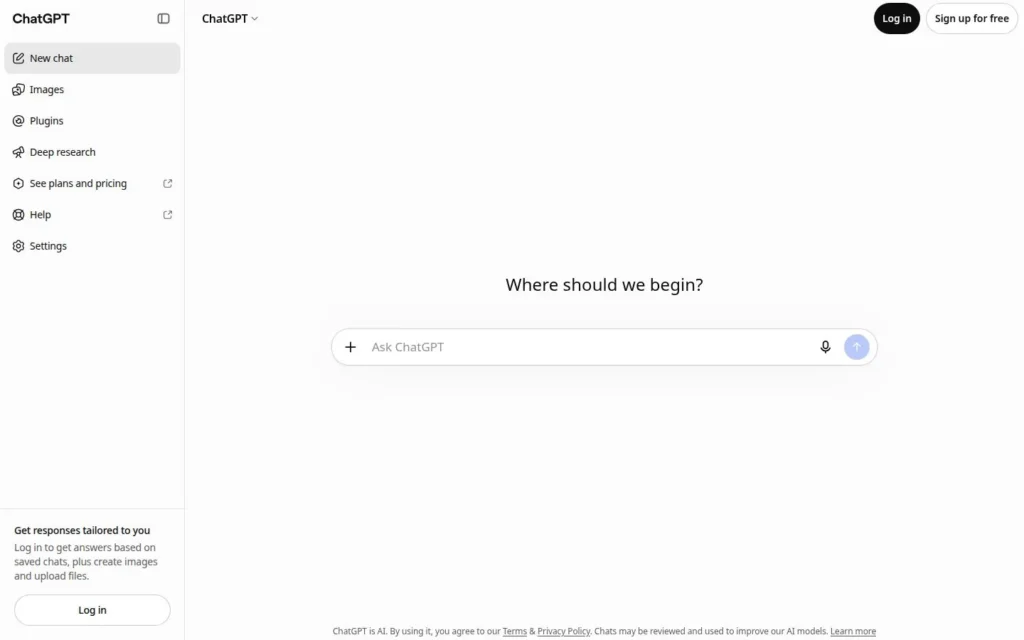
OpenAI’s ChatGPT is the most flexible tool on this list. For SEO it is useful for brainstorming topic clusters, turning interview notes into outlines, drafting meta descriptions, writing regular expressions for Search Console filters and explaining unfamiliar technical issues. It can search the web, but treat every fact, statistic and quote it gives you as something to verify.
Best for: first drafts of briefs and outlines, and repetitive tasks you can check quickly.
2. Semrush
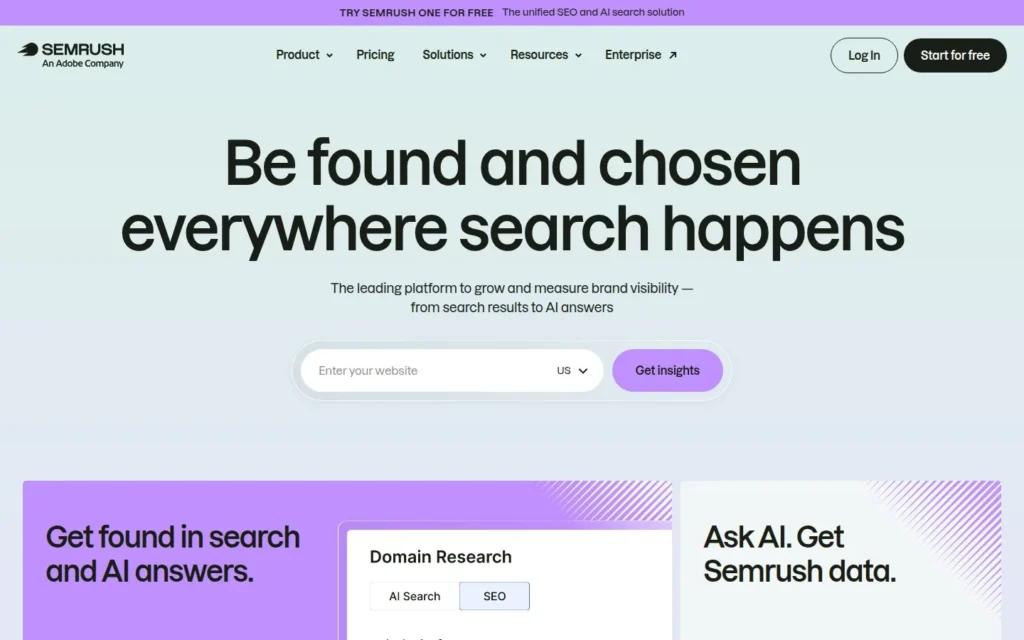
Semrush, now an Adobe company, is an all-in-one platform for keyword research, competitor analysis, site audits, backlink research and local SEO. Newer features track how visible your brand is in AI answers and which prompts people use, alongside classic rankings.
Best for: teams that want research, auditing and AI visibility tracking in one subscription.
3. Ahrefs
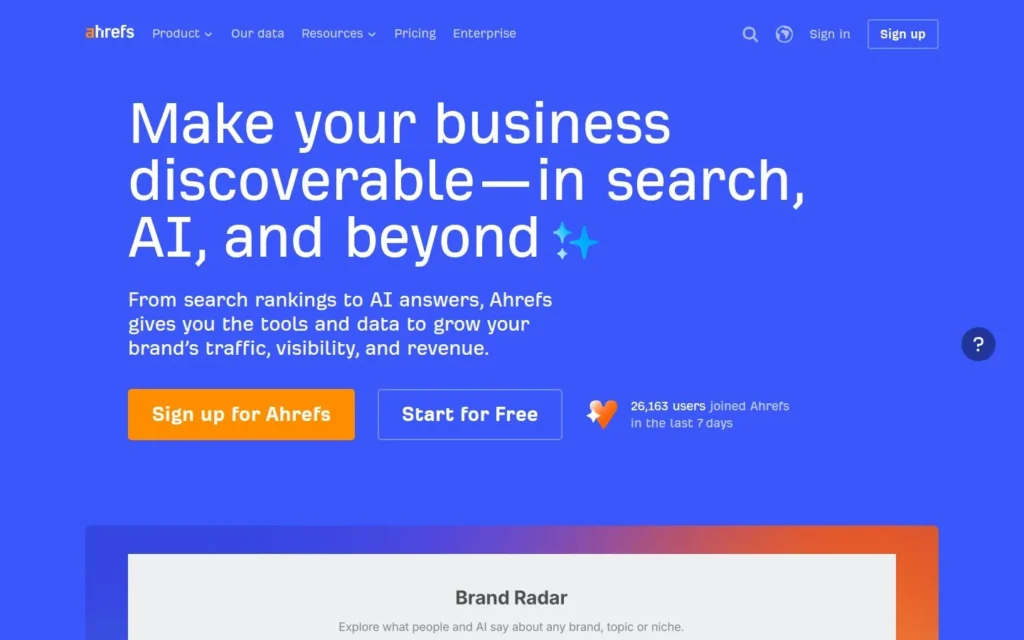
Ahrefs built its reputation on backlink data and has grown into a full marketing platform. Its Brand Radar tool shows what AI assistants say about a brand, which prompts mention it and which pages AI tools send visitors and crawlers to. Keyword research, site auditing and rank tracking sit in the same place.
Best for: link research and competitive analysis, with AI visibility data alongside.
4. MarketMuse
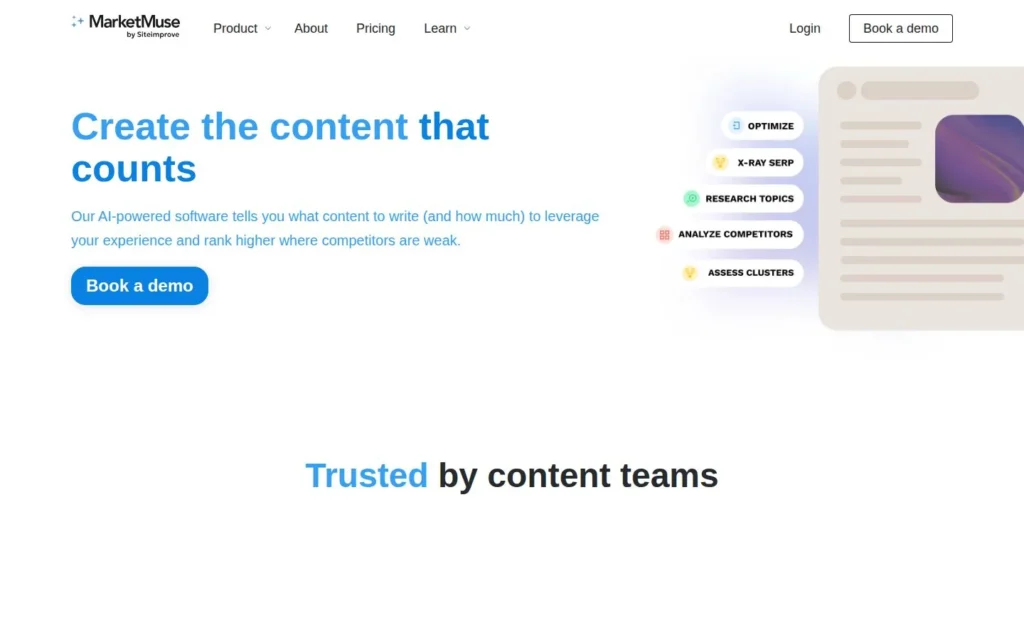
MarketMuse, now part of Siteimprove, focuses on content strategy. It looks at the topics your site already covers, estimates how much content you would need to compete on a subject and points to gaps where competitors are weak. It is better at deciding what to write than at writing it.
Best for: planning a content program around topical authority.
Writing and content optimization
These tools compare a draft with the pages that already rank and suggest the terms, questions and subtopics it is missing. Each does this a little differently, so it is worth trialing two side by side on the same article. Our SurferSEO vs Clearscope comparison is a good place to start.
5. Surfer
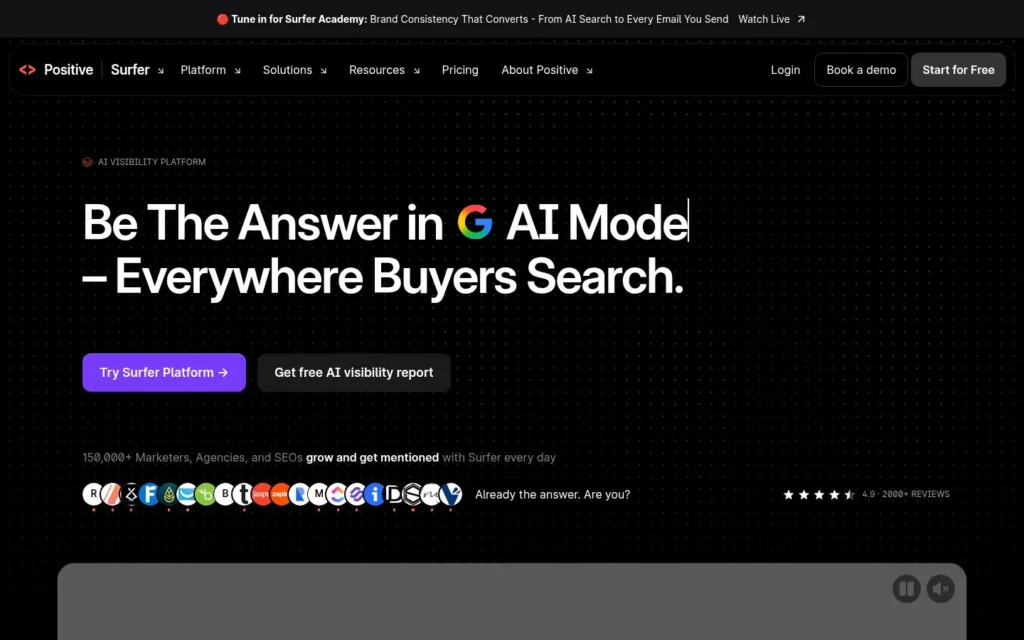
Surfer’s Content Editor scores a draft against top-ranking pages and suggests terms, headings and length as you write. The platform now also tracks your visibility in AI search and covers the whole content workflow. We explain how it works in What Is Surfer SEO?
Best for: writers who want clear optimization guidance as they draft.
6. Clearscope
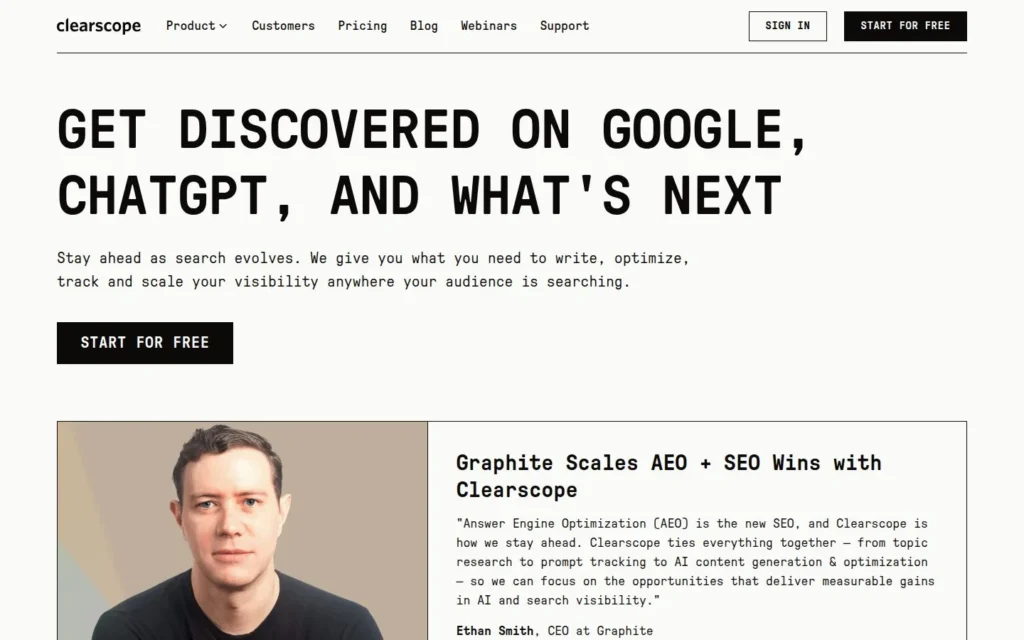
Clearscope is known for simple, readable content reports that editors and subject experts can use without SEO training. It has added topic research, prompt tracking and visibility monitoring across AI platforms, so teams can see whether their content turns up in AI answers as well as in Google.
Best for: editorial teams that want straightforward guidance and clean reports.
7. Frase
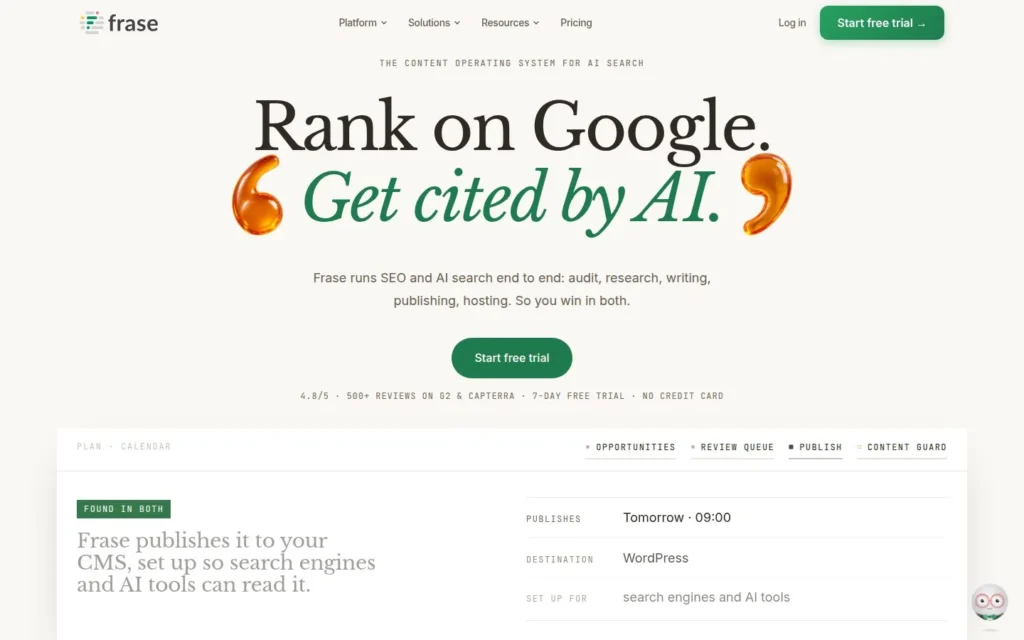
Frase covers the whole content workflow. It audits existing pages, researches what top results and AI answers cover, drafts briefs and articles, and can publish to your CMS. It suits small teams where one person handles research, writing and publishing.
Best for: small teams that want research, briefs and drafting in one tool.
8. NeuronWriter
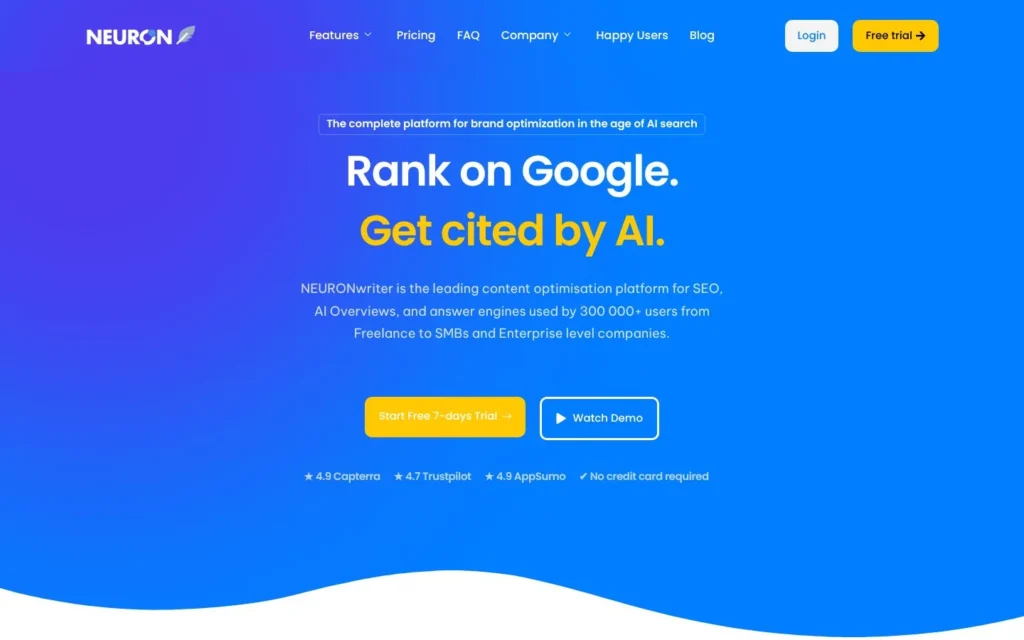
NeuronWriter is a content optimization editor that analyzes competing pages and suggests terms, questions and structure. It also targets visibility in Google’s AI Overviews and other answer engines, and it is popular with freelancers and small agencies.
Best for: freelancers and small agencies that want detailed term suggestions.
9. RankIQ (now Aided)
RankIQ was built for bloggers. It finds lower-competition keywords in a niche and grades posts against what already ranks. RankIQ has since evolved into Aided, which adds one-click tools for social posts, emails and updating older posts for AI search. Existing RankIQ members get access to both.
Best for: bloggers and solo publishers looking for winnable topics.
Automation and on-site fixes
10. Alli AI
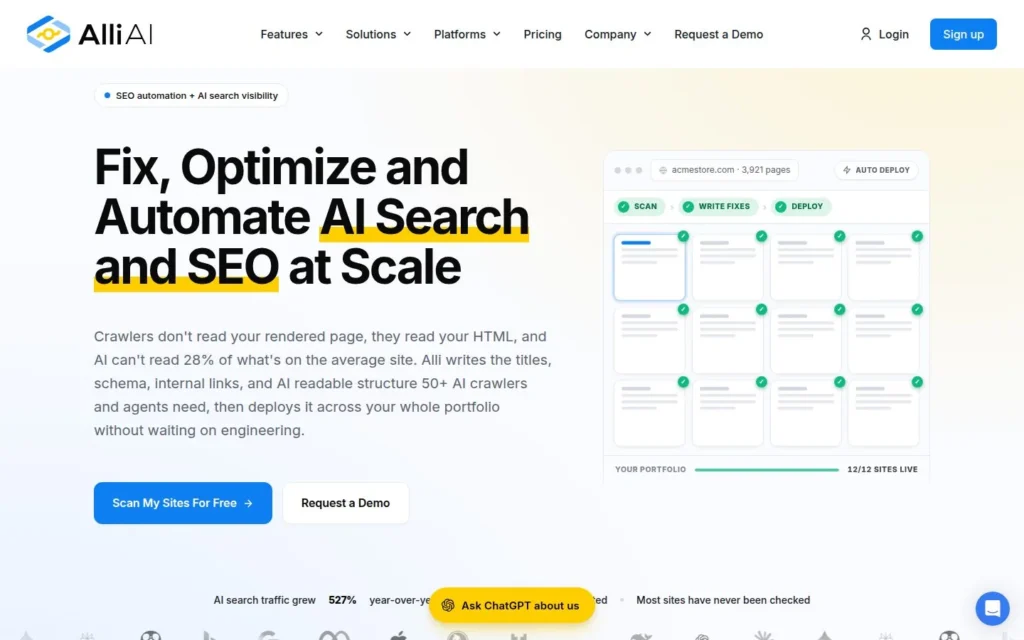
Alli AI writes and deploys on-page changes, such as titles, schema markup, internal links and AI-readable structure, across one site or a whole portfolio without waiting on developers. That speed is useful, especially on platforms that are hard to edit, but review what it changes before you let it run at scale.
Best for: teams that need to roll out on-page fixes across many pages quickly.
11. SEO.ai
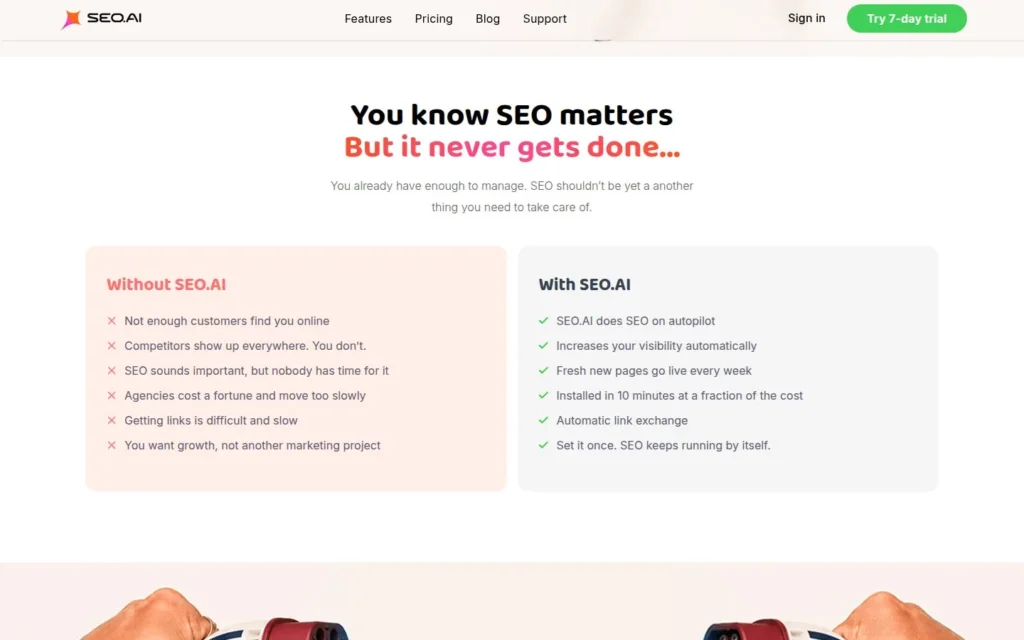
SEO.ai describes itself as an AI SEO agent. It creates content, publishes it to your site and builds backlinks through an automatic link exchange. Hands-off publishing can suit some businesses, but read Google’s spam policies first. They list excessive link exchanges and automated link-building services as link spam, and treat pages generated at scale without adding value as scaled content abuse.
Best for: owners who want a hands-off content engine and will review what it publishes.
Tracking and reporting
12. Pro Rank Tracker
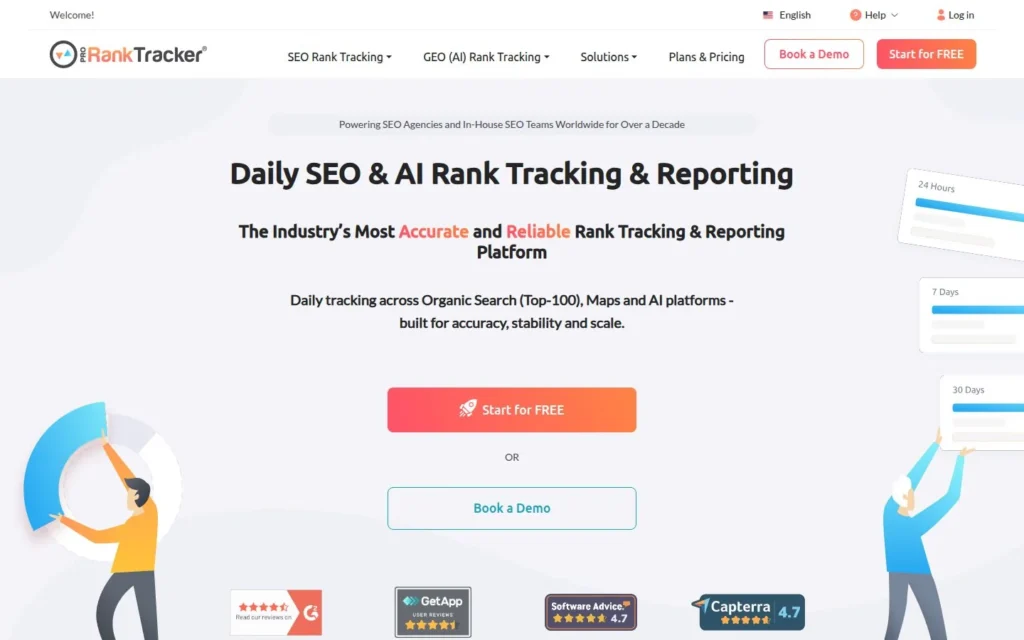
Pro Rank Tracker focuses on one job: daily rank tracking for the top 100 Google results on desktop and mobile, plus Google Maps and YouTube rankings, with reporting built for agencies and in-house teams. It now also tracks appearances in AI results, including Google’s AI Overviews and AI Mode, Gemini, ChatGPT, Copilot and Perplexity.
Best for: dependable daily rank tracking across classic and AI search.
13. Diib
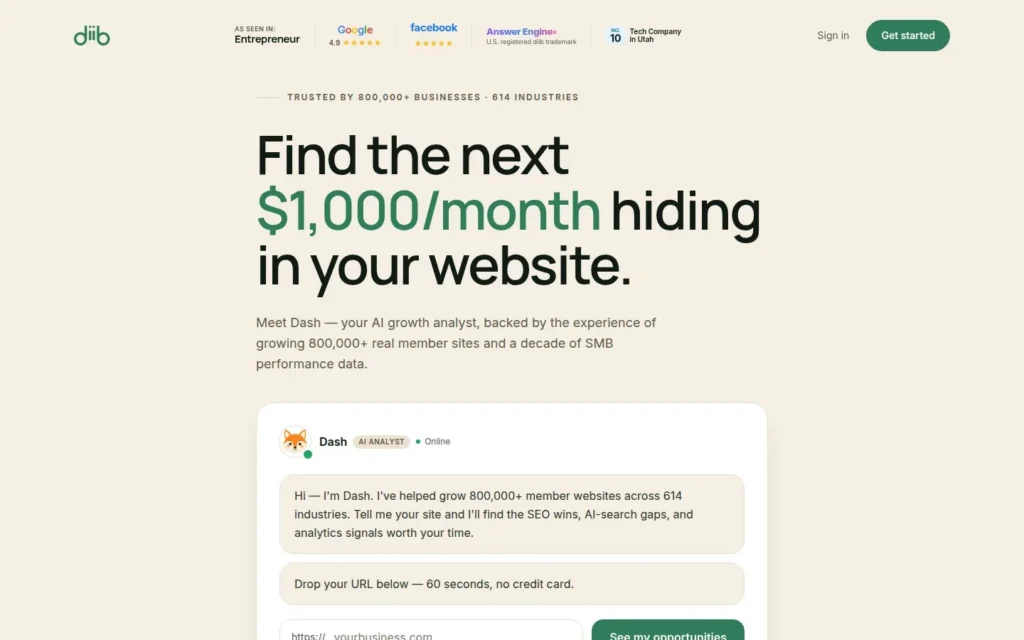
Diib is aimed at small business owners rather than SEO specialists. It scans your site, and its AI analyst, Dash, explains ranking gaps, missing citations in AI answers and quick fixes in plain language.
Best for: owners who want clear next steps without learning an SEO platform.
Speed and technical health
Speed isn’t an AI problem, but it affects both rankings and conversions, and these two tools use automation to make it easier to measure and fix.
14. NitroPack
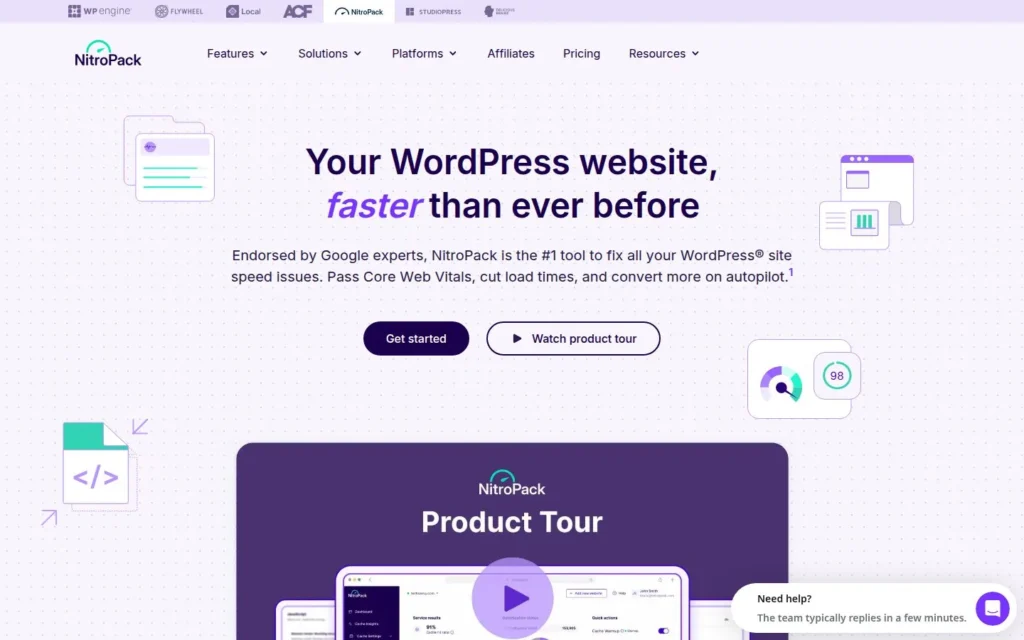
NitroPack is a speed optimization service for WordPress and WooCommerce sites. It handles caching, image optimization and code delivery automatically to help pages pass Core Web Vitals. It is a quick way to improve a slow site, but it works best on a site that is already reasonably well built: no plugin can fully fix an overloaded theme.
Best for: WordPress sites that need a speed boost without a rebuild.
15. PageSpeed Insights
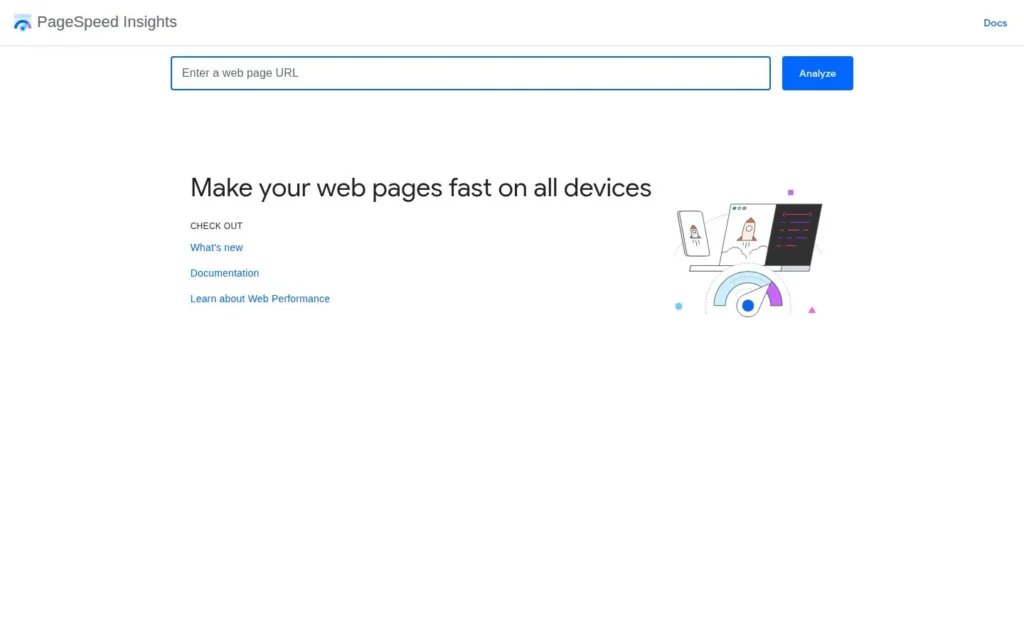
Google’s free PageSpeed Insights shows how a page performs for real visitors, using field data from the Chrome User Experience Report, and runs a Lighthouse lab test with specific recommendations. It isn’t an AI tool, but it is the yardstick for every speed change you make, including the ones a tool like NitroPack makes for you.
Best for: checking Core Web Vitals before and after every change.
How to use AI tools without hurting your rankings
Google rewards helpful content however it is produced. Its guidance on AI-generated content focuses on quality, not the tool. The risk comes from using AI to publish more than anyone can properly review.
- Keep a human editor. Every AI draft needs someone who knows the subject to check facts, add real examples and cut filler.
- Add what only you know. Original data, client results, photos and expert opinion are what make a page worth ranking, and AI can’t supply them.
- Avoid scaled content. Publishing many near-identical pages, such as one per city with only the name changed, is the pattern Google calls scaled content abuse.
- Be careful with automated links. Link exchanges and automated link building can fall under Google’s link spam policy, whatever tool runs them.
- Measure outcomes. Track inquiries, sales and AI citations, not just rankings, so you know whether a tool is worth what you pay for it.
Want help choosing the right tools, or a team to run them for you? Our SEO team uses AI where it saves time and people where judgment matters. Start a conversation.